Sunday, June 30, 2019

MARCUS AURELIUS 161-180AD Ancient Roman Emperor COIN COLLECTING GUIDE

Marcus Aurelius father of Commodus Gladiator Movie Emperor Ancient Roman Coins Guide

Learn about the period Marcus Aurelius came from and see a collection of ancient coins having to do with him and more in this informative guide

https://www.youtube.com/watch?v=ofyTt6i_01c

Marcus Aurelius was from a time period of Roman history ruled by what is now named the Adoptive Emperors. From emperor Nerva on until Marcus Aurelius, the Roman emperors adopted as their "son" the next succeeding emperor. This era was known for immense prosperity. However, Marcus Aurelius actually broke the customs of "adopting" able administrators and instead chose his son to succeed him. This caused some issued in history as his son was not as positive for the Roman empire as his father was. This time period has been popularized by the famous Hollywood film, the Gladiator, with Russell Crowe. The fact is that Commodus did fight in the arena, and it made for an interesting story in the film. Most people don't know that coins of Marcus Aurelius and other Roman emperors and empresses can be owned almost on any budget. This guide was designed to show the "adoptive" emperors up to Marcus Aurelius and ends with his son Commodus. This gives you a very great idea of what these ancient coins looked like and the types that were available.

Additional Resources


NERVA 97AD Rome mint Large Quality Ancient Roman Coin Equality Cult i36440

Nerva - Roman Emperor: 96 -98 A.D. - Bronze As 27mm (8.65 grams) Rome mint: 97 A.D. Reference: RIC 77, S 3060 IMPNERVACAESAVGPMTRPCOSIIIPP - Laureate head right. AEQVITASAVGVST - Aequitas standing left, holding scales and cornucopia. SC in field.

TRAJAN Makes Parthamaspates PARTHIAN King Ancient Sestertius ROMAN Coin i16812

Trajan - Roman Emperor: 98-117 A.D. - Bronze Sestertius 34mm (21.47 grams) Rome mint: 116 A.D. Reference: RIC II 667; BMCRE 1046; Cohen 328 IMP CAES NER TRAIANO OPTIMO AVG GER DAC PARTHICO P M TR P COS VI P P, laureate and draped bust right, seen from behind. REX PARTHIS DATVS, SC in exergue, Trajan seated left on platform presenting Parthamaspates to kneeling Parthian; attendant standing behind Trajan.

HADRIAN Bisexual Emperor BIG Sestertius Ancient Roman Coin ROMA i40683

Hadrian - Roman Emperor: 117-138 A.D. Bronze Sestertius 32mm (19.28 grams) Rome mint: 119-121 A.D. Reference: RIC 562b; sear5 #3622; Cohen 1187. IMP CAESAR TRAIANVS HADRIANVS AVG, laureate head right, slight drapery on left shoulder PONT MAX T R POT COS III, SC below, Roma seated left on cuirass, holding Victory & sceptre.

Antoninus Pius Father of Marcus Aurelius 152AD Ancient Silver Roman Coin i32084

Antoninus Pius - Roman Emperor: 138-161 A.D. Silver Denarius 17mm (2.83 grams) Rome mint: 152 A.D. Reference: RIC 203, BMC 762, C 196 ANTONINVSAVGPIVSPPTRPXV - Laureate head right. COSIIII - Vesta standing left, holding simpulum and Palladium.

FAUSTINA I Sestertius 141AD HUGE Ancient Roman Coin Posthumous i27403

Faustina I - Roman Empress Wife of Roman Emperor Antoninus Pius POSTHUMOUS After Death Christian Deification Issue. Bronze Sestertius 33mm (25.25 grams) Struck at the mint of Rome circa 141-146 A.D. Reference: RIC 1108 (Antoninus Pius), C 37 DIVAAVGVSTA FAVSTINA - Veiled, diademed, draped bust right. AETERNITAS - Providentia standing left, holding globe and scepter.

ANTONINUS PIUS & MARCUS AURELIUS as CAESAR Ancient Silver Roman Coin Rare i29457

Antoninus Pius - Roman Emperor: 138-161 A.D. Antoninus Pius and Marcus Aurelius, as Caesar Silver Denarius 19mm (3.19 grams) Rome mint: 140 A.D. Reference: RIC 417a; sear5 #4524;  BMCRE 155; RSC 15 ANTONINVS AVG PIVS P P TR P COS III, laureate head of Pius right. AVRELIVS CAESAR AVG PII F COS, bare head of Aurelius right.

ANTONINUS PIUS & MARCUS AURELIUS Cyprus Mint LARGE Ancient Roman Coin i46372

Antoninus Pius - Roman Emperor: 138-161 A.D. Antoninus Pius & Marcus Aurelius Bronze 31mm (21.30 grams) of Cyprus Reference: Sear GIC 1523; B.M.C. 24.84,48 AVT. K. T. AIΛ. AΔP. ANTΩNINOC CЄB. Є., Laureate  head of Antoninus Pius right. M. AVPHΛIOC KAICAP VIOC CЄBAC, Bare-headed, draped and cuirassed bust of Murcus  Aurelius right.

AELIUS CAESAR Hadrian's Successor 137AD Pannonia Ancient Roman Coin i36470

Aelius - Roman Caesar: 136-137 A.D. - Bronze As 27mm (12.59 grams) Rome mint: 137 A.D. Reference: RIC 1071 L AELIVS CAESAR, bare head right. TR. POT. COS. II. PANNONIA. S.C. Pannonia, towered, standing facing, head left, holding vexillum upright, raising dress with her left hand.

MARCUS AURELIUS 162AD Sestertius Salus Authentic Ancient Roman Coin i47251

Marcus Aurelius - Roman Emperor: 161-180 A.D. - Bronze Sestertius 32mm (25.25 grams) Rome mint: 162-163 A.D. Reference: C 564. BMC 1038. RIC 843 IMP CAES M AVREL – ANTONINVS AVG P M Laureate head right. SALVTI AVGVSTOR TR P XVII S – C Salus standing l., holding scepter and feeding snake twined round altar; in exergue, COS III.

LUCIUS VERUS co-emperor of Marcus Aurelius RARE Ancient Silver Roman Coin i12318

Lucius Verus - Roman Emperor: 161-169 A.D. - Silver Denarius 17mm (3.08 grams) Rome mint: 166 A.D. Reference: RIC 548 (Marcus Aurelius), C 286 LVERVSAVGARMPARTHMAX - Laureate head right. TRPVIIMPIIICOSII - Parthian captive seated right, hands tied behind back, arms before.* Numismatic Note: Historically significant type celebrating victory over Parthia.

FAUSTINA II Marcus Aurelius Wife HUGE Rare Ancient Roman Coin Fertility i16811

Faustina II - Roman Empress & Wife of Emperor Marcus Aurelius - 161-175 A.D. - Bronze Sestertius 31mm (30.67 grams) Rome mint: 161-175 Reference: RIC 1638 (Marcus Aurelius), C 100 FAVSTINAAVGVSTA - Diademed, draped bust right. FECVNDITAS - Fecunditas standing right, holding scepter and infant Commodus; SC across fields.

Faustina II wife of Marcus Aurelius Ancient Roman Coin DIANA LUNA Hope i27364

Faustina II - Roman Empress & Wife of Emperor Marcus Aurelius - 161-175 A.D. - Bronze As 26mm (13.15 grams) Rome mint: 161-175 A.D. Reference: RIC 1629,Cohen 86; Sear5 5293. FAVSTINA AVGVSTA, draped bust right DIANA LVCIF, Diana standing right with long torch.

Faustina II Marcus Aurelius wife Silver Ancient Roman Coin Deification i31248

Faustina II - Roman Empress & Wife of Emperor Marcus Aurelius - 161-175 A.D. - Posthumous Issue Silver Denarius 16mm (2.35 grams) Rome mint: 176-180 A.D. Reference: RIC 744 (Marcus Aurelius), S 5215, C 71 DIVAFAVSTINAPIA - Draped bust right. CONSECRATIO - Peacock standing right.

COMMODUS son of Marcus Aurelius Ancient Silver Roman Coin Equality Cult i26701

Commodus - Roman Emperor: 177-192 A.D. Silver Denarius 18mm (2.35 grams) Rome mint: 183-184 A.D. Reference: RIC 60; C. 893. M COMMODVS  ANTON AVG PIVS, laureate head right. P M TR P VIIII IMP VI COS IIII PP, Aequitas standing left with cornucopia and scales.

Commodus son of Marcus Aurelius Silver Ancient Roman Coin APOLLO LYRE i39534

Commodus - Roman Emperor: 177-192 A.D. Son of Marcus Aurelius Silver Denarius 18mm (2.95 grams) Rome mint Struck circa 190-191 A.D. Reference: RIC 218, S 5629, C 24 MCOMMANTPFELAVGBRITPP - Laureate head right. APOLPALPMTRPXVICOSVI - Apollo standing, facing, holding plectrum and lyre on column.

CRISPINA daughter in law of Marcus Aurelius Big Rare Ancient Roman Coin i42132

Crispina - Roman Empress: 177-183 A.D. - Wife of Commodus - Bronze Sestertius 30mm (26.67 grams) Rome mint  178-172 A.D. Reference: RIC 672a (Commodus). CRISPINA AVGVSTA, draped bust right SALVS Exe: S-C, Salus seated left, holding patera from which she feeds snake coiled about altar, resting arm on back of chair.

Marcus Aurelius Coins

Marcus Aurelius father of Commodus Gladiator Movie Emperor Ancient Roman Coins Guide


Download this article by right-clicking here and selecting save as

Article by Ilya Zlobin, world-renowned expert numismatist, enthusiast, author and dealer in authentic ancient Greek, ancient Roman, ancient Byzantine coins and beyond.

For more great articles and videos on ancient coins, visit, https://www.trustedancientcoins.com/articles/ or Click here to see all of my EDUCATIONAL COIN VIDEOS


Learn More Here: MARCUS AURELIUS 161-180AD Ancient Roman Emperor COIN COLLECTING GUIDE An interesting video about ancient coin collecting. World-renowned numismatic expert created this for educational purposes.


from Trusted Ancient Coins - Feed https://www.trustedancientcoins.com/marcus-aurelius-ancient-roman-coins-guide/amp/
via https://www.trustedancientcoins.com

Saturday, June 29, 2019

“Show me the money”: A look at investing in rare coins

"Show me the money": A look at investing in rare coins

Having collectibles as an investment can be a great way to diversify your investment portfolio and minimize risk. The general rule of thumb is to invest in what you love when it comes to collectibles so that if your collection doesn’t realize a return, you still get to enjoy your collection.With uncertainty ever present in the public and private markets coupled with recession and other economic ups and downs, tangible assets, also known as hard assets, present a variety of options for investors who want to put money toward areas of their personal interest. These may include income producing assets such as timberland, farmland, and commodities of all kind.  For more general information on investing in tangible assets, click here. Collectibles are fast becoming a popular investment vehicle for those who have lost trust in the public stock markets or are tired of fluctuations. Tangibles allow an investment to appreciate in value over time, which appeals to investors; however, personal interest in a tangible asset remains the number one reason people choose to invest in collecting them. Rare coins are considered to be a commodity-like investment where sentimental value may exist, but coins are one tangible that can also produce attractive financial returns. Note that there is a distinction between coins as bullion and coins as numismatics. Bullion has a higher ‘melt value’ – the value the metal would be worth if melted down. Numismatic coins, because they are often much older and made of various metals and components, have a lower melt value and are worth less when melted then they are in coin form. The general rule of thumb is to buy bullion for business, numismatics for fun.
This is the second in an AIMkts® series providing an introduction into various subclasses of antiques and collectibles.  This installment:  rare coins.

Why rare coins? 

People collect rare coins for the same reason people collect art, says Ilya Zlobin, ancient numismatic coin expert, dealer and enthusiast of TrustedCoins.com. “Rare coins, especially of the ancient Greeks and Romans capture the feel and the art of the time period [like] statues and architecture that have long been lost to history…” Also, says Zlobin, there is a very high upside resale potential should investors make the right buy for the right price. “…Stories of exponential growth understandable stoke investor interest in the world of collectibles,” according to a 2012 Barclay’s report. However, “Relatively few wealth individuals own treasure solely for its financial characteristics. Investors that do seek financial returns on insurance from their treasure typically favor commodity-like items, such as precious metals, coins and jewelry.” Once nicknamed “the hobby of kings“, collecting coins has become an everyman’s game thanks to a rise in numismatic scholarship, education, access to information and a growing sophistication of the general public over the last 500 years and is popularly referred to as “the king of hobbies”. For the average person, owning coins make possessing a piece of history remarkably accessible, and for those with an interest in antiquities, coins are more accessible, in general, than larger, tangible asset investments. For beginners, collecting rare coins may seem daunting. Experts and experienced collectors offer this advice:
  • Specialize – Choose a particular emperor, denomination, theme or time period and use it to guide how you invest. Stay focused on a particular concentration and build within that. Financier Louis E. Eliasberg did just that and his collection got him listed among the world’s most famed collectors.
  • Scrutinize – Don’t just pick randomly from your choices. Know what you’re looking for and examine coins carefully to make sure they fit with the direction you’re taking your collection.
  • Study – Collectors shouldn’t just take the opinions or advice of sellers. Collectors should become experts themselves, studying up on values, denominations, rarity and other aspects of the area in which they intent to collection so as to make an informed decision when investing. Read trade magazines, talk to other collectors and learn what questions to ask. Never buy what you don’t understand. Study up on some coin collecting lingo here.
  • Start Small – Buying small will allow investors to start collecting without betting the farm. Buying large quantities of coins or buying high priced coins should only come with experience. While buying rare coins or coins minted with historically importance is ideal, amateur or inexperience collectors should never spend large amounts of money on coins they don’t understand. Collector and numismatics mentor Susan Headley notes, “If you can’t afford to shell out $2,000 [per] coin to buy…high grades, then buy common coins in the finest grades you can.”
Grading Adding to that advice, we caution all coin investors to know their dealer. Investing in rare coins is as much as investment as putting money toward any asset class – trust is key. As a purveyor of rare coins, Zlobin notes that the grading scale is subjective one, with Good (G) being the lowest, to Very Good (VG), then Fine (F) followed by Very Fine (VF), followed by Extra Fine (EF) and finally, a perfect mint-state called Fleur-De-Coin (FDC). The overall appearance of a coin and its appeal to buyers and sellers alike are all highly subjective matters and grading standards may vary. Well-known houses like Heritage Auctions provide some guidance and the Professional Coin Grading Service, among others, can give a point of reference as well, but keep in mind that very fine distinctions between coins will make a big difference in its worth, even thousands of dollars’ worth of difference for the smallest distinction. Subjectivity is considered to be one of the risks in rare coin investing. “With many dealers and collectors, the coin’s state of preservation and aesthetic beauty are of paramount importance. In other words a beautiful coin is more desirable, and also much rarer in that state of preservation,” says Zlobin. “There are other things that are important for ancient numismatic coins, too, such as centering, the artistic beauty of the strike and its sharpness. Ancient coins were struck by hand, so a coin in fantastic preservation that is nicely centered and of an interesting historical character, period or city would have higher value.” Speaking of risk… “Caveat emptor” says Zlobin. “Deal with people that provide a guarantee and a good track record with their coins [and] with people you know and trust. Always ask for the best possible price.” Just like any investment has inherent risk, coin collecting is no different. Are the risks any greater or less than investing anywhere else? Not if you invest in what you love, say collectors. “There are many reputable dealers out there,” says Zlobin “It is a very big advantage to deal with them, as many have knowledge and experience, and know that it’s just good business to sell only authentic coins.” However, the Federal Trade Commission has issued warnings to help protect consumers from fraud. Read the warning here. False claims about grading, current value and buy back options are the most common ways investors lose money when collecting coins. “Examine coins in person. It’s difficult, if not impossible, to make a practical decision about buying a particular coin based on a photo or a conversation with the seller,” advises the FTC. “Check out any coin dealers in a search engine online. Read about other people’s experiences. Try to communicate offline if possible to clarify any details. In addition, contact your state Attorney General and local consumer protection agency.” And always get a second opinion. Zlobin’s risk advice to investors is:
  • Always try to get the best possible price – Investing in rare coins doesn’t have to break your bank. Some dealers can give you breaks as the margins are often-times sufficient for everyone to be happy.
  • Be detached about the outcome of the deal – Do your best to secure a great deal, but be an investor that can also think as a collector. This way you win either way.
  • Keep records of how much you paid for a coin, and all receipts – This will give you a record of the coin’s grade, and purchase information.  Also, if you want to sell these investments and realize a profit, you’ll need to be organized.
  • Work with dealers willing to prove themselves – Some dealers provide a lifetime guarantee of authenticity, and some will issue certificates of authenticity.
Return on Investment In general, investors can expect rare coins to have an investment horizon similar to most other investments – one that will last for a few months to many years. “I have seen ancient coins sold at one major auction house, to be sold just several months later and for more money at another auction house,” says Zlobin. “Yes, it is possible to make money rather quickly with intimate knowledge of the market [but] the money in ancient numismatic coins is made during the purchase of the item. A good rule of thumb is to always do your research and know that you can at least get what you paid for the coin back… With uncertainties about the valuations of all the global currencies, it is a good idea to hedge your net worth with this being a great avenue for storing wealth. Numismatic coins especially may carry a higher resale value than gold or silver bullion, as they are not as prone to those specific market fluctuations.” There are professional numismatic reference sites, where investors can trace the price trends of many different coin types going back many years and get an idea of how certain coins will fare on the resale market. Although any investment carries risk, and although almost all dealers of any investment will tell you that “past performance is not an indicator of future results”, investors can make informed decisions about their coins by taking a look at how the pros have traced them through the years. Is collecting rare coins for you? So, who are the buyers of rare coins? For the most part, they are anyone who is interested in owning a tangible piece of history. “For ancient numismatic coins specifically, the historical value is very important,” Zlobin says. “For example, a Julius Caesar coin sells in any market in practically any condition. Another well-known name would be Alexander the Great.” Coin collecting, known as “the king of hobbies” is an investment almost anyone can make. For serious investors, coins are a tangible asset that will provide diversity in an investment portfolio and help hedge against inflation as the value of rare coins is generally stable. “A lot of people don’t know this, but ancient coins are actually quite abundant,”according to Zlobin. Some celebrities and many other famous individuals are known to be avid coin collectors such as J.P. Morgan, the Hunt brothers hockey great Wayne Gretzky, Buddy Ebsen (aka “Jed Clampett”), and Nicole Kidman. “Coins, especially numismatic coins, are a beautiful asset to have,” says Zlobin. “Think about how tough it would be to fit a huge painting or a statue or another heavy work of art in your pocket, but an ancient coin can be placed in your pocket, yet be worth quite a lot of money. So you can say the reason why coins are so popular is that they are the original form of money and will always have some sort of value, whether intrinsic or numismatic, or both.”
By Alicia Purdy, Contributing Editor, Accredited Investor Markets
Reprinted with permission from Accredited Investor Markets (www.aimkts.com)

Ancient Roman Camp Gate CoinsDownload this article by right-clicking here and selecting save as

For more great articles and videos on ancient coins, visit, https://www.trustedancientcoins.com/articles/

Source Here: “Show me the money”: A look at investing in rare coins Fascinating video pertaining to ancient coin collecting. An ancient coin expert created this to educate people.


from Trusted Ancient Coins - Feed https://www.trustedancientcoins.com/investing-in-rare-coins/amp/
via https://www.trustedancientcoins.com
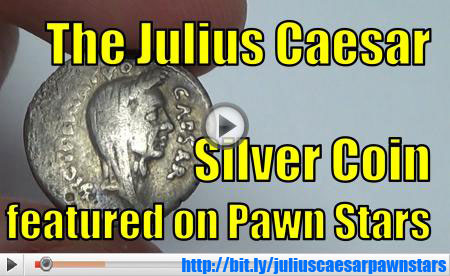
Julius Caesar Silver Coin featured on Pawn Stars from History Channel TV Show 2000 Year Old Roman Coin

Julius Caesar Silver Coin featured on Pawn Stars from History Channel TV Show

Learn more about the portrait coin featured on television from the last month of Julius Caesar's life

https://www.youtube.com/watch?v=8vTKZIcAzpc

This is the Julius Caesar coin that was featured on the famous television show called Pawn Stars. I made this article to tie in all the different videos I have on the topic of ancient Greek and Roman coins. I did not wind up selling the coin as the proprietor Rick did a low-ball offer on my coin, you can watch the episode here, called Rick the Emperor. Click here to see the Caesar ancient coin if it is still available for sale in my eBay store. To see the coins I have: Additional Educational Videos and Articles:

  Authentic Ancient  Coin of:

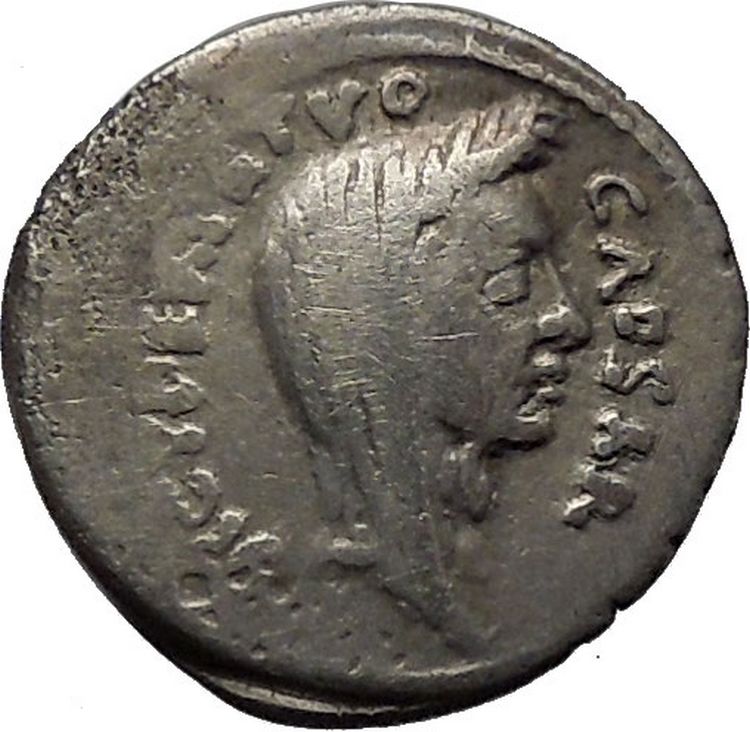
Julius Caesar - Roman Dictator - Silver Denarius 19mm (3.89 grams) Struck at the mint of Rome February-March 44  B.C. P. Sepullius Macer, moneyer Reference: RSC 40; B. 48; B.M.C. 4175; Syd. 1074a; Craw. 480/14 CAESAR DICT PERPETVO, laureate and veiled of Julius Caesar head right. P . SEPVLLIVS MACER, Venus Victrix standing left, holding Victory and scepter,  star set on ground to right.

On this coin, Julius Caesar breaks tradition of prohibiting the portraying of  living individuals on Roman coins by showing his own portrait on it. It was  considered a practice of Eastern Greek monarchs rather than the Republic that  Rome was still supposed to be. This could have been seen as a clear sign of  Julius Caesar styling himself after king issuing such a coin. This coin, along  with other factors may have been what culminated in the assassination of Julius  Caesar on March 15, 44 B.C. Venus was the patron-goddess of Julius Caesar, and  also the goddess whom his family traces it’s decent from, and therefore she is  pictured here holding the goddess of Victory. The interesting thing about this  coin is that it features a lifetime portrait of Julius Caesar in the short time  that he issued this coin before being assassinated. Being minted for only a  short time February to March of 44 B.C., this is a historically significant coin  and a must-have key piece for an ancient coin collection. The portrait of Julius  Caesar was used by historical personages such as Mark Antony and Augustus (first  Roman emperor) after his death as a tool to assume the political power and love  the people had towards Caesar. The portrait coins that were issued during the  lifetime of Julius Caesar, therefore, as they are scarcer in number than many of  his other issues, and being minted for a very short time is something of great  historical value as being from a key historical point that has echoed to our  times and made Western Civilization the way it is today.


Julius Caesar Silver Coin featured on Pawn Stars from History Channel TV Show


Ancient Coins Download this article by right-clicking here and selecting save as

Article by Ilya Zlobin, world-renowned expert numismatist, enthusiast, author and dealer in authentic ancient Greek, ancient Roman, ancient Byzantine coins and beyond.

For more great articles and videos on ancient coins, visit, https://www.trustedancientcoins.com/articles/ or Click here to see all of my EDUCATIONAL COIN VIDEOS

Read Full Article Here: Julius Caesar Silver Coin featured on Pawn Stars from History Channel TV Show 2000 Year Old Roman Coin Informative video about numismatic coins. An ancient coin expert published this to educate people.


from Trusted Ancient Coins - Feed https://www.trustedancientcoins.com/julius-caesar-silver-coin-featured-pawn-stars-history-channel-tv-show-2000-year-old-roman-coin/amp/
via https://www.trustedancientcoins.com

Friday, June 28, 2019

Greek Imperial aka Roman Provincial Coins Explained By Expert on Video

List of GODS & GODDESSES on Ancient Greek & Roman Coins for Sale on eBay

List of GODS & GODDESSES on Ancient Greek & Roman Coins including the Deities and Mythical Characters to Collect

A world of mystery, intrigue and fantasy awaits. See the various gods, goddesses, and mythical deities and characters available to collect on ancient Greek and Roman coins. Transport yourself to the ancient past, explore the unexplored and collect authentic ancient coins of those various deities. This article was intended to expand on various ideas for a coin collector and a fantastic coin collection. By clicking on the links below, you will search my eBay store for specific examples of these these gods that I have available on coins. The goal is for you to have an easy-to-use guide, which allows you to view the different types of coins easily and quickly. Below is a link to download this article in PDF format to your computer, which will allow you to come back to this info in the future, or if you print it out, you can always find this article again online via the link: https://www.trustedancientcoins.com/list-of-gods/
  1. Zeus on Ancient Greek Coins | Jupiter, his Roman Equivalent Ancient Coins
  2. Hercules on Ancient Greek and Roman Coins
  3. Ares on Ancient Greek Coins | Mars, his Roman Equivalent Ancient Coins | Virtus, the god of valor, often depicted like Mars or Ares on ancient Roman Coins
  4. Nymph the Ancient Greek Deity depicted on Greek and Roman coins
  5. Felicitas the Ancient Roman goddess of luck | Fortuna the Ancient Roman goddess of luck | Tyche the Ancient Greek goddess of luck - Luck goddesses.
  6. Hera on Ancient Greek Coins | Juno the Ancient Roman Goddess on Coins
  7. Nike, the ancient Greek goddess of victory ancient coins | Victory the Ancient Roman Goddess of Victory - Both I believe to be the ancient depictions of what later was known to be angels.
  8. Apollo on Ancient Greek and Roman Coins, the god of music, healing and light (sun)
  9. Helios, the sun god, on Ancient Greek Coins | Sol, the sun god, on Ancient Roman Coins
  10. Artemis, the goddess of the hunt on Ancient Greek Coins | Diana, the goddess of the hunt on Ancient Roman Coins
  11. Aphrodite, the goddess of love on Ancient Greek Coins | Venus, the goddess of love on Ancient Roman Coins
  12. Spes, the goddess of hope on ancient Roman coins | Elpis, the goddess of hope on ancient Greek coins
  13. Laetitia, the goddess of happiness on ancient Roman coins
  14. Isis, the originally ancient Egyptian goddess on ancient Roman and Greek coins
  15. Athena the ancient Greek goddess of wisdom on coins | Minerva the ancient Roman goddess of wisdom on coins
  16. Concordia, goddess of agreement in marriage and society on ancient Roman Coins
  17. Aequitas on ancient Roman Coins - Aequitas is the nominative form of the Latin æquitatem, meaning justice, equality, conformity, symmetry, or fairness, and is the source of the modern word "equity".
  18. Justitia, the Roman goddess of Justice on ancient Roman Coins
  19. Eros, the primordial god of sexual love and beauty on Ancient Greek Coins | Cupid, the primordial god of sexual love and beauty on Ancient Roman Coins
  20. Libertas, the god of liberty on ancient Roman coins
  21. Pietas, the god of piety on ancient Roman coins
  22. Vesta on ancient Roman coins - Vesta was the virgin goddess of the hearth, home, and family in Roman religion.
  23. Genius on ancient Roman coins - In ancient Roman religion, the genius was the individual instance of a general divine nature that is present in every individual person, place, or thing.
  24. Demeter on ancient Greek coins | Ceres on ancient Roman coins | Annona on ancient Roman coins - Goddesses that are depicted in connection with the harvest.
  25. Asclepius the Ancient Greek and Roman god of medicine
  26. Hygeia on Ancient Greek and Roman coins - Hygieia, or Hygeia, was a daughter of the god of medicine, Asclepius. She was the goddess of health, cleanliness and sanitation and afterwards, the moon.
  27. Salus on Ancient Roman coins - Salus (Health) a Goddess of the Romans, the same that was worshipped under the name of Hygiea by the Greeks, who feigned her to be the daughter of Asclepius and of Minerva.
  28. Telesphorus on Ancient Greek and Roman coins -  In Greek mythology, Telesphorus (or Telesphoros; Τελεσφόρος) was a son of Asclepius. He frequently accompanied his sister, Hygieia. He was a dwarf whose head was always coveredwith a hood or cap. He symbolized recovery from illness, as his name means "the accomplisher" or "bringer of completion" in Greek.
  29. Persephone on Ancient Greek and Roman coins | Kore on Ancient Greek and Roman coins - In Greek mythology, Persephone also called Kore (the maiden) is the daughter of Zeus and the harvest-goddess Demeter, and queen of the underworld.
  30. Priapus on Ancient Greek and Roman coins - In Greek mythology, Priapos (Ancient Greek: Πρίαπος), Latinized as Priapus, was a minor rustic fertility god, protector of livestock, fruit plants, gardens and male genitalia. His Roman equivalent was Mutunus Tutunus. He was best noted for his huge, permanent erection, which gave rise to the medical term priapism.
  31. Poseidon on Ancient Greek and Roman coins | Neptune on Ancient Roman coins - Poseidon was the god of the sea, and, as "Earth-Shaker," of earthquakes in Greek mythology. Neptune (Latin: Neptūnus) was the god of water and the sea in Roman mythology and religion.
  32. Pax, the goddess of peace on Ancient Roman coins | Eirene, the goddess of peace on Ancient Roman coins
  33. Janus the Ancient Roman God of Beginnings and Endings, doors and name behind our month January
  34. Abundantia, the ancient Roman goddess - Abundantia was the Roman goddess of good fortune, abundance and prosperity.
  35. Hermes, Greek god of commerce | Mercury, the Roman equivalent of the Greek god Hermes
  36. Three Graces, also known as the Charites on ancient Greek and Roman coins
  37. River Gods on Ancient Greek and Roman coins
  38. Kronos, the ancient Greek time god

See also:

Download this article by right-clicking here and selecting save as

Article by Ilya Zlobin, world-renowned expert numismatist, enthusiast, author and dealer in authentic ancient Greek, ancient Roman, ancient Byzantine coins and beyond.

Greek and Roman Gods and Goddesses on Ancient Coins

Article Source Here: List of GODS & GODDESSES on Ancient Greek & Roman Coins for Sale on eBay Fascinating blog post about numismatic coins. World-renowned numismatic expert created this to educate people.


from Trusted Ancient Coins - Feed https://www.trustedancientcoins.com/list-of-gods/amp/
via https://www.trustedancientcoins.com
Wednesday, June 26, 2019

CHARIOTS as shown on Authentic Ancient Greek & Roman Coins for Sale on eBay

Ancient Greek and Roman Chariots on Coins

Biga Ancient Roman Chariot Coin

See the different types of chariots depicted on coins of ancient Greece and Rome

The ancient Greeks and Romans used the chariot for war, racing, processions and travel. On ancient coins, the chariot was featured being driven by emperors, important personages and even gods and goddesses. They were usually pulled by horses, but on ancient coins sometimes even by flying serpents and goats. There is a certain excitement associated with the chariot that is almost archetypal. The Latin word "carrus" is the root of the English word "chariot". Imagine the excitement the ancient spectators would feel as they saw chariots racing around the Circus Maximus in Rome or even other parts of the empire. Chariots are a fascinating topic of study and collecting. See the sights and feel the feeling with these authentic ancient coins depicting the chariot here. Click here to see all coins with a chariot. Biga Ancient Roman Chariot Coin Triga Three Horse Chariot Ancient Roman Coin Triumphal Quadriga Four Horse Chariot Roman Coin Sol the Sun God in Four Horse Drawn Quadriga Chariot Biga, Triga and Quadriga chariots on ancient ancient Roman coins. Biga means a two horse, triga means a three horse and a quadriga means four horse chariot. A chariot pulled by goats! By winged serpents, with this depiction of Triptolemus. By even elephants! There is even a story about Pompey the Great who tried to use a chariot pulled by elephants for his triumphal march through Rome. It couldn't fit through the gates though, so he had to get on a regular chariot pulled by horses. There was a Greek general who had a battle on the streets of one of the Greek cities he tried to conquer. One of his commanders tried sending an elephant through the doorway into the city. However, the elephant got stuck and the re-enforcements could not come for the battle. Also it was Seleukos I of the Seleukid kingdom, who traded the territories Alexander the Great won in northern India for 500 War elephants. Hannibal also apparently used the war elephants. Alexander the Great battled elephants in India mounted by archers. Interesting and exciting creatures elephants are! Interesting type issued for Constantine, for his deification, where he is pictured taking a quadriga (four horse) chariot up to heaven with the hand of God accepting him.

Download this article by right-clicking here and selecting save as

Article by Ilya Zlobin, world-renowned expert numismatist, enthusiast, author and dealer in authentic ancient Greek, ancient Roman, ancient Byzantine coins and beyond.

Source Here: CHARIOTS as shown on Authentic Ancient Greek & Roman Coins for Sale on eBay Cool video about ancient coin collecting. An ancient coin expert posted this for educational purposes.


from Trusted Ancient Coins - Feed https://www.trustedancientcoins.com/ancient-greek-roman-chariots-coins/amp/
via https://www.trustedancientcoins.com

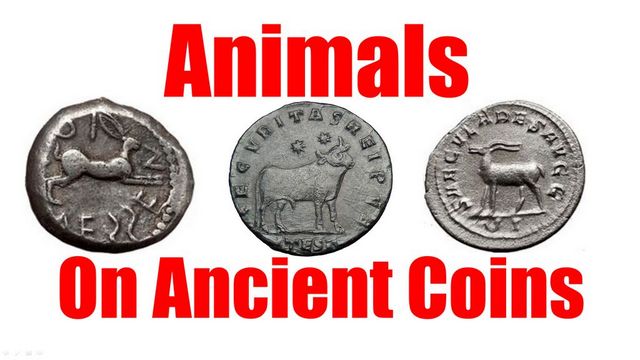
Animals on Ancient Greek and Roman Coins List for Collecting

Animals on Ancient Greek and Roman Coins

A list of the different animals that have appeared on ancient Greek and Roman coins

Wild, exotic animals, available throughout the ancient Greek and Roman empires were revered and even struck on their coins. Animals such as antelopes, lions and elephants were brought to amphitheaters, the most famous being the Colosseum and for use in various entertainments. Many Roman legions used animals as a symbol for their legions. Just like we have zoos in modern times, the ancients too were fascinated by the exotic beauty and even possible danger these animals presented. The ancient Greeks and Romans put animals on their coins and are a very interesting topic in themselves to collect, especially for animal lovers. The goal of this guide is to help you know the type of animals on coins and make it easy to put together a collection from my eBay ancient coin store, which has thousands of coins available. You can click on each of the links below and see the examples I have available for sale. A world of intrigue, wonder and amazement awaits you as you explore this fascinating topic ...
  1. Horse on Ancient Greek and Roman Coins
  2. Bull on Ancient Greek and Roman Coins
  3. Cow on Ancient Greek and Roman Coins
  4. Calf on Ancient Greek and Roman Coins
  5. Ox on Ancient Greek and Roman Coins
  6. Boar "pig" on Ancient Greek and Roman Coins
  7. Pig on Ancient Greek and Roman Coins
  8. Lion on Ancient Greek and Roman Coins
  9. Panther on Ancient Greek and Roman Coins
  10. Eagle on Ancient Greek and Roman Coins
  11. Owl on Ancient Greek and Roman Coins
  12. Peacock on Ancient Greek and Roman Coins
  13. Dove on Ancient Greek and Roman Coins
  14. Rooster on Ancient Greek and Roman Coins
  15. Chicken on Ancient Greek and Roman Coins
  16. Rooster on Ancient Greek and Roman Coins
  17. Rabbit on Ancient Greek and Roman Coins
  18. Hare on Ancient Greek and Roman Coins
  19. Ram on Ancient Greek and Roman Coins
  20. Wolf on Ancient Greek and Roman Coins
  21. Dog on Ancient Greek and Roman Coins
  22. Hound on Ancient Greek and Roman Coins
  23. Camel on Ancient Greek and Roman Coins
  24. Stag another word for deer on Ancient Greek and Roman Coins
  25. Bee another word for deer on Ancient Greek and Roman Coins
  26. Antelope another word for deer on Ancient Greek and Roman Coins
  27. Elephant on Ancient Greek and Roman Coins
  28. Snake on Ancient Greek and Roman Coins
  29. Serpent on Ancient Greek and Roman Coins
  30. Fish on Ancient Greek and Roman Coins
  31. Crayfish on Ancient Greek and Roman Coins
  32. Shell on Ancient Greek and Roman Coins
  33. Crab on Ancient Greek and Roman Coins
  34. Turtle on Ancient Greek and Roman Coins
  35. Dolphin on Ancient Greek and Roman Coins
  36. Octopus on Ancient Greek and Roman Coins
  37. Scorpion on Ancient Greek and Roman Coins
See also for mythical creatures:

Download this article by right-clicking here and selecting save as

Article by Ilya Zlobin, world-renowned expert numismatist, enthusiast, author and dealer in authentic ancient Greek, ancient Roman, ancient Byzantine coins and beyond.

Originally Published Here: Animals on Ancient Greek and Roman Coins List for Collecting Cool article pertaining to collecting old coins. An expert numismatist created this to educate people.


from Trusted Ancient Coins - Feed https://www.trustedancientcoins.com/animals-on-ancient-coins/amp/
via https://www.trustedancientcoins.com